Home › Burst Pipe
Burst pipe in Fulshear — what to do in the first ten minutes
The first ten minutes decide whether this is a plumbing repair or a restoration claim. Read the first three steps before you read anything else.
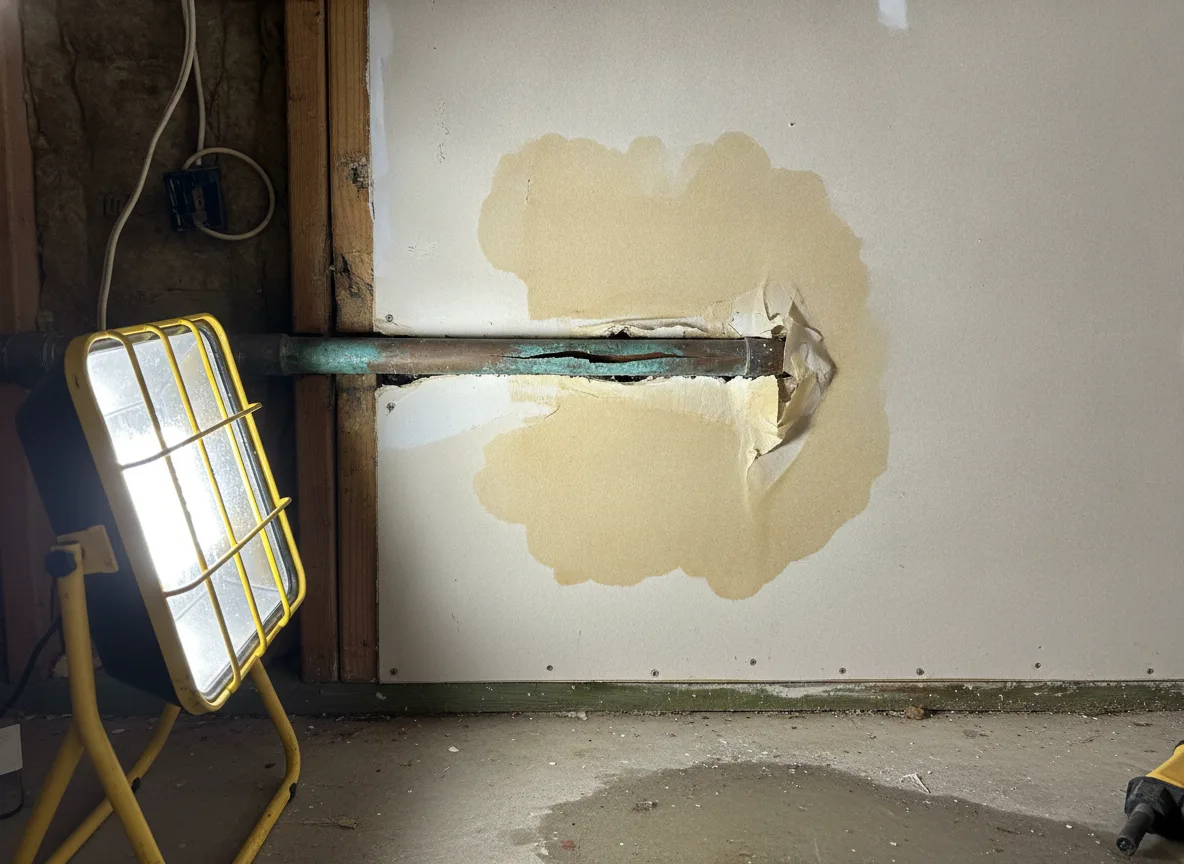
The first ten minutes decide whether this is a plumbing repair or a restoration claim. Read the first three steps before you read anything else.
Your main shutoff is either at the street in a rectangular box near the kerb, or where the supply line enters the house. At the street you may need a meter key or a long screwdriver to lift the lid; the valve is a nut or a lever beside the meter. Turn it clockwise until it stops. If you cannot find it, close the shutoff on the nearest fixture upstream of the break — a toilet or sink supply valve — which limits the damage even if it does not stop it.
If water has reached outlets, the electrical panel, or the area around a water heater or furnace, switch that circuit off at the breaker before you step in. If water is at or near the panel itself, do not touch the panel — call the utility. This is the part of a burst pipe that actually hurts people.
Once the main is off, open a tap at the lowest point — an outside hose bib or a ground-floor sink. The water still sitting in the pipes above drains out there instead of continuing through the break.
Before anything is moved or dried, photograph the break, the standing water and anything damaged. If you end up making an insurance claim, the photographs taken in the first hour are worth more than anything taken later.
Fulshear does not freeze often, which is exactly why burst pipes are common when it does — exposed runs in attics, garages and exterior walls are frequently uninsulated in this area, and a hose left connected to a bib over a freeze is a reliable way to split the line behind it. The other common cause is sustained high water pressure, which stresses joints year-round and shortens the life of every supply fitting in the house.
A pipe clamp or repair tape can slow a small split enough to matter, and they are worth having. They are a stopgap, not a repair — the pipe still needs replacing, and a taped joint under pressure can let go again without warning.
Most Texas homeowner policies cover sudden accidental discharge and the resulting water damage. Gradual leaks you should have noticed are usually excluded. Your policy and your carrier decide, not us.
It depends almost entirely on access. A split in an exposed garage run is a modest repair. The same split inside a wall or under a slab costs several times that, because most of the work is reaching it. The inspection gives you a written number before anything starts.
Send the details and we'll route it to a licensed local contractor.